
Etsy SEO: the rules for writing your 13 tags
Etsy gives every listing 13 tags, each up to 20 characters. Here is how to fill them without wasting space, without repeating yourself and in the buyer's own words, with examples.
Whether an Etsy listing shows up in search depends largely on how well its title, tags, attributes and category match the words buyers type. Of these, tags are where sellers make the most mistakes. Some leave half of the 13 tags empty, some write the same word 13 times in different orders, and some hit the 20-character limit and fall back on meaningless abbreviations.
In this article we cover the rules on Etsy's own help pages (as of September 2026) and what they mean in practice, using a t-shirt as the example.
Etsy's official tag rules
| Rule | What Etsy says |
|---|---|
| Number of tags | Up to 13 tags per listing |
| Length | Each tag up to 20 characters |
| Allowed characters | Letters, numbers and spaces; ' and - can be used within a word |
| Start | A tag cannot start with ' or - |
| Special letters | Some accented letters such as À, É, Ñ, Ö, Ü and ß are supported |
| Phrase type | A single tag can be a short, descriptive phrase (e.g. “silver earrings”) |
Etsy also stresses that tags should be accurate, relevant and varied, and notes they are especially useful when no matching attribute exists. Phrases that describe buyer intent, like “gift for her”, are highlighted as one of the strongest uses of a tag.
Rule 1: Use all 13 tags
Every tag is a separate chance to match a buyer's search. A listing with 7 tags matches fewer search phrases than a listing of the same quality with 13. Every empty slot is free visibility left on the table.
Rule 2: Don't repeat, diversify
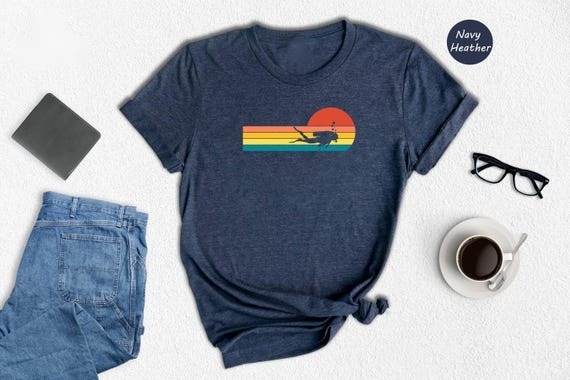
The most common mistake is repeating the same core word in every tag. For a scuba shirt, for example, this is a weak set:
- scuba shirt
- scuba tshirt
- scuba t shirt
- scuba tee
- shirt scuba
These five tags target almost the same search. It is more effective to pick tags that cover different buyer intents: who it's for (dive instructor gift), when it's worn (dive trip outfit), which interest (ocean lover gift), which style (retro diving tee).
Etsy recommends the same thing: you don't need to repeat a phrase as a tag if it already appears in your category or attributes, because those work like tags too. If you selected “Black” as the color attribute, for example, you can target another search phrase instead of a “black shirt” tag.
Rule 3: Use phrases, not single words
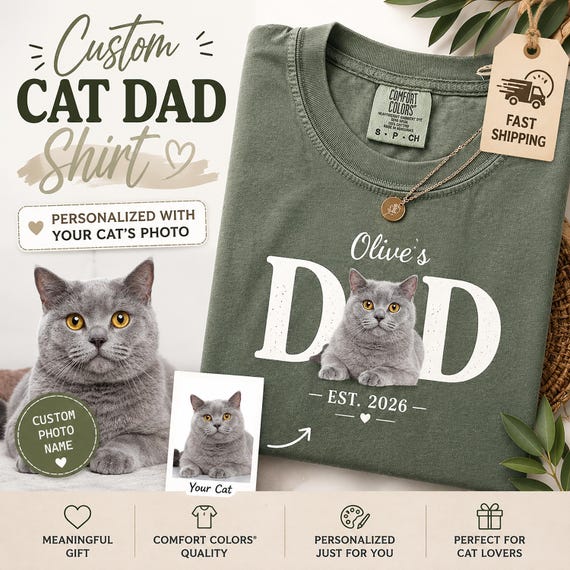
“cat” on its own competes with millions of products and doesn't say what the buyer wants. “cat dad shirt” (13 characters) is both clearer and closer to purchase intent. Etsy's own examples are built on natural two- and three-word phrases.
Rule 4: Write in the buyer's language
If you sell from Turkey to the US, your tags need to be in English and use the words American buyers use. Use “shirt” or “tee”, not a literal translation of the Turkish word, and remember that “hoodie” and “sweatshirt” are different products. Etsy's search bar autocomplete is a good starting point for seeing what buyers actually type.
Example: 13 tags for a t-shirt
Product: a funny t-shirt for cat owners who love diving. Title: “Scuba Diving Cat Dad Shirt, Funny Diver Gift for Cat Lovers”. Color and audience are set as attributes. Suggested tags:
| Tag | Characters | Intent it targets |
|---|---|---|
| scuba diving shirt | 18 | Product type |
| cat dad shirt | 13 | Audience |
| diver gift | 10 | Gift shopper |
| dive instructor gift | 20 | Profession |
| funny cat shirt | 15 | Humor |
| ocean lover gift | 16 | Interest |
| scuba lover tee | 15 | Synonym product name |
| cat owner gift | 14 | Audience |
| dive trip outfit | 16 | Occasion |
| fathers day cat dad | 19 | Seasonal |
| underwater cat | 14 | Design theme |
| gift for divers | 15 | Gift shopper |
| scuba gift for him | 18 | Recipient gender |
Every tag is under 20 characters, none is a copy of another, and each captures a different search intent. Some words overlap with the title, which is natural; what matters is that the tags don't repeat each other.
A method for writing 13 tags in 10 minutes
A fixed framework, instead of starting from scratch for every product, speeds you up and cuts down on repetition. This one works well for a t-shirt or sweatshirt:
- Product type (1-2 tags): Name the product the way buyers do. Try different names like “shirt”, “tee” and “sweatshirt” in separate tags.
- Audience (2-3 tags): Who wears it? Profession, family role, hobby group. “nurse gift”, “grandpa shirt”, “hiking lover”.
- Gift intent (2-3 tags): A large share of Etsy buyers are shopping for gifts. Phrases like “gift for him” and “birthday gift idea”.
- Theme and style (2-3 tags): The design's subject and visual language. “retro sunset”, “minimalist line art”.
- Occasion and season (1-2 tags): When or where the product will be used. “family reunion”, “halloween party”.
- Final check: Is any tag over 20 characters, do two tags target the same search, is a phrase already selected as an attribute?
Don't leave attributes empty
Etsy says attributes and categories work like tags. Filling in attributes such as color, size, audience and theme frees your tags for other phrases. Attribute fields vary by category; if you choose the right category for a t-shirt, the relevant fields appear in the listing form.
Common tag mistakes
- Using brand and character names: Putting someone else's brand or character name in a tag is an intellectual property risk and can get the listing removed.
- Irrelevant trending words: Adding a popular word that has nothing to do with the product goes against Etsy's “accurate and relevant” rule and lowers conversion.
- Plural and singular duplicates: Pairs like “cat shirt” and “cat shirts” waste a tag.
- Meaningless abbreviations: Squeezing into 20 characters with something like “sc dvng sht” is not what buyers search for.
- Repeating categories and attributes: Re-entering the color, size or category you already selected as a tag.
- The same tag set across the whole shop: If each product speaks to a different buyer, its tags should be different too.
How often should you update tags?
To change tags, just edit the listing: open the product under Shop Manager > Listings and update the Tags field. A good rule of thumb: for listings that get views but no sales, review photos and price first; for listings that get no views, review the title and tags. It also pays to add seasonal tags (Father's Day, Halloween) as the season approaches, then swap in evergreen phrases once it ends.
In Custombull, listing SEO optimization can be done in bulk: up to 500 listings a day on Bronze and 1,500 a day on Gold. Each listing uses 1 credit, and suggestions are never applied without your approval.
Frequently asked questions
Can I use Turkish characters in tags?
Etsy's list of supported special characters includes letters like Ç, Ö and Ü, but if you sell to buyers in the US, your tags should be in English anyway.
Is it a mistake to repeat a title word in a tag?
No. The repetition Etsy warns about is tags repeating each other, and re-entering phrases already covered by your category and attributes.
Is there a way to add more than 13 tags?
No, the limit is 13 tags per listing. Use the title, attributes and description for additional search phrases.
Can I use the same tag set on similar products?
It is natural for products in the same collection to share some tags. But if each product has a different design theme, audience and gift intent, reflect that in the tags. Copying the same 13 tags across hundreds of products makes your own products compete with each other in the same searches and misses traffic from other search phrases.
Do tags affect how I rank on Google?
Etsy's SEO help page lists the title, description, images and videos as the key SEO elements of a listing page for Google. Tags work primarily for search within Etsy.